Six signs a Seattle roof needs replacement, not another patch, plus the real cost gap: a free inspection versus $12,000 to $30,000 replacement.
A roof rarely fails all at once. It sends warnings first: a curling shingle here, a soft spot there, a stain on the ceiling that shows up after every storm. The hard part is telling the difference between a problem worth patching and a roof that's telling you it's done. Get that call wrong and you either pay for a repair that buys you six months, or replace a roof that had five good years left in it.
Here are the signs that actually mean replacement, not repair, based on what we see walking roofs across the Puget Sound.
#The Six Signs That Point to Replacement
1. Granule loss you can see from the ground
Asphalt shingles are coated in granules that block UV light and protect the underlying asphalt. As a roof ages, those granules wash off and collect in the gutters. A few granules after a storm is normal wear. Bald patches on the shingle field, or gutters consistently full of black grit, mean the shingles have lost their protective layer and are aging out for good. Our own roof inspection checklist puts heavy granule loss in the "needs replacement" category instead of the "schedule a repair" one, for exactly this reason.
2. Curling or cupping shingle edges
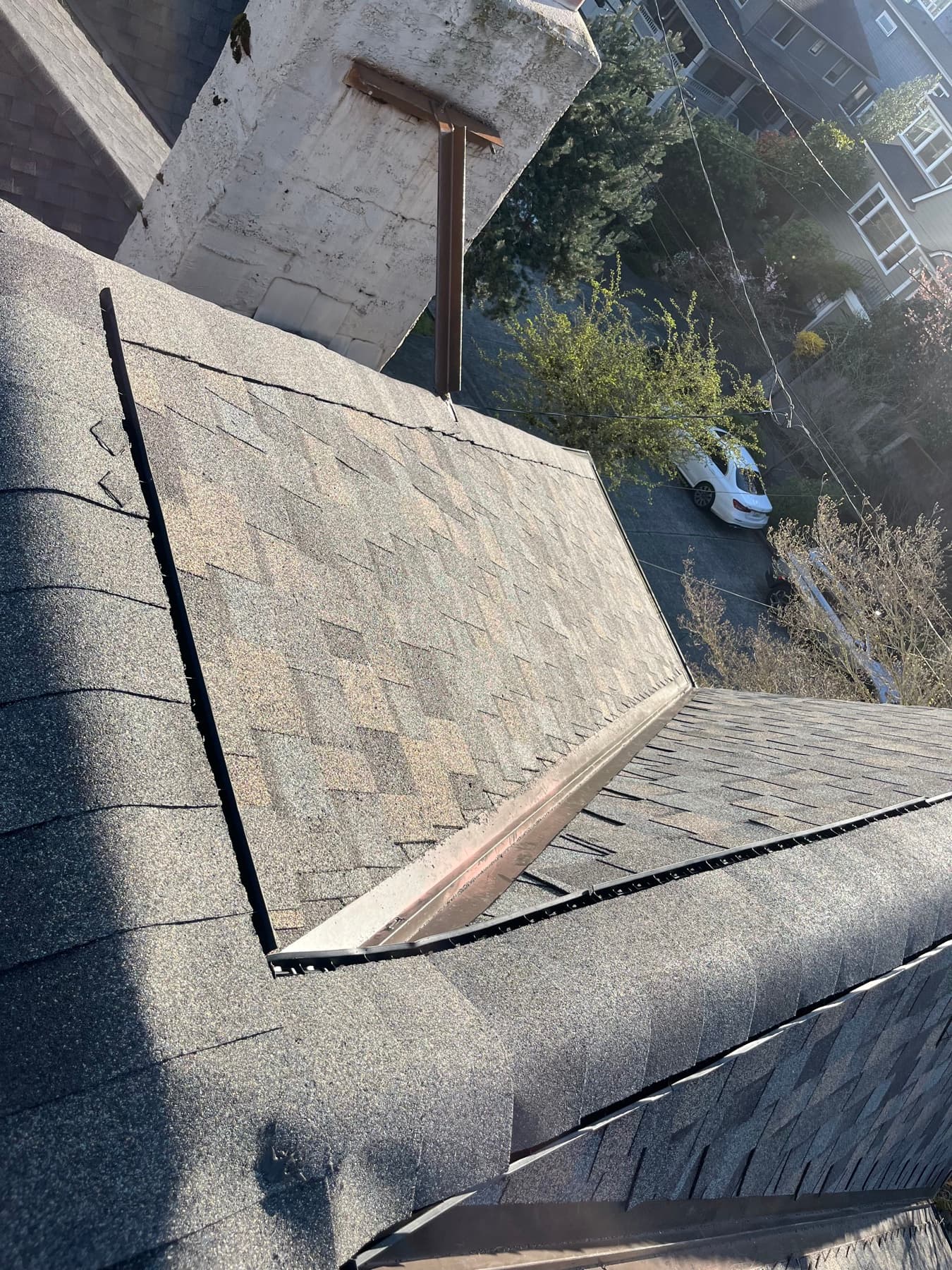
Shingles that curl up at the edges or cup in the middle have dried out. This happens from age, sun exposure, and here in the PNW, from years of sitting wet under moss and tree cover. Once shingles curl, they're brittle. Nailing one back down usually cracks it. A handful of curling shingles on an otherwise solid roof might be a spot repair. Curling across multiple slopes is a roof reaching the end of its service life.
3. Age past the material's realistic lifespan
Manufacturer brochures quote lifespans tested in mild, dry climates. The Puget Sound isn't that. Our lifespan guide for the region lays out what we actually see:
| Material | Brochure Says | PNW Reality |
|---|---|---|
| 3-tab asphalt | 25 yrs | 15 to 20 yrs |
| Architectural shingle | 30 to 50 yrs | 25 to 30 yrs |
| Cedar shake | 30 yrs | 20 to 25 yrs |
| Standing seam metal | 50+ yrs | 50+ yrs |
| Flat membrane (TPO) | 20 to 30 yrs | 15 to 25 yrs |
If your 3-tab shingle roof is past 18 years, or your architectural shingles are past 25, age alone should have you thinking about replacement even if nothing looks obviously wrong yet.
4. Leaks that come back after repair
One leak, fixed once, is a repair. A leak that returns after being patched, or a second leak showing up somewhere new, usually means the roof's underlying materials have failed broadly, not just at one spot. Patching a symptom instead of the cause is how homeowners end up paying for the same leak three times before finally replacing the roof.
5. Soft or spongy decking
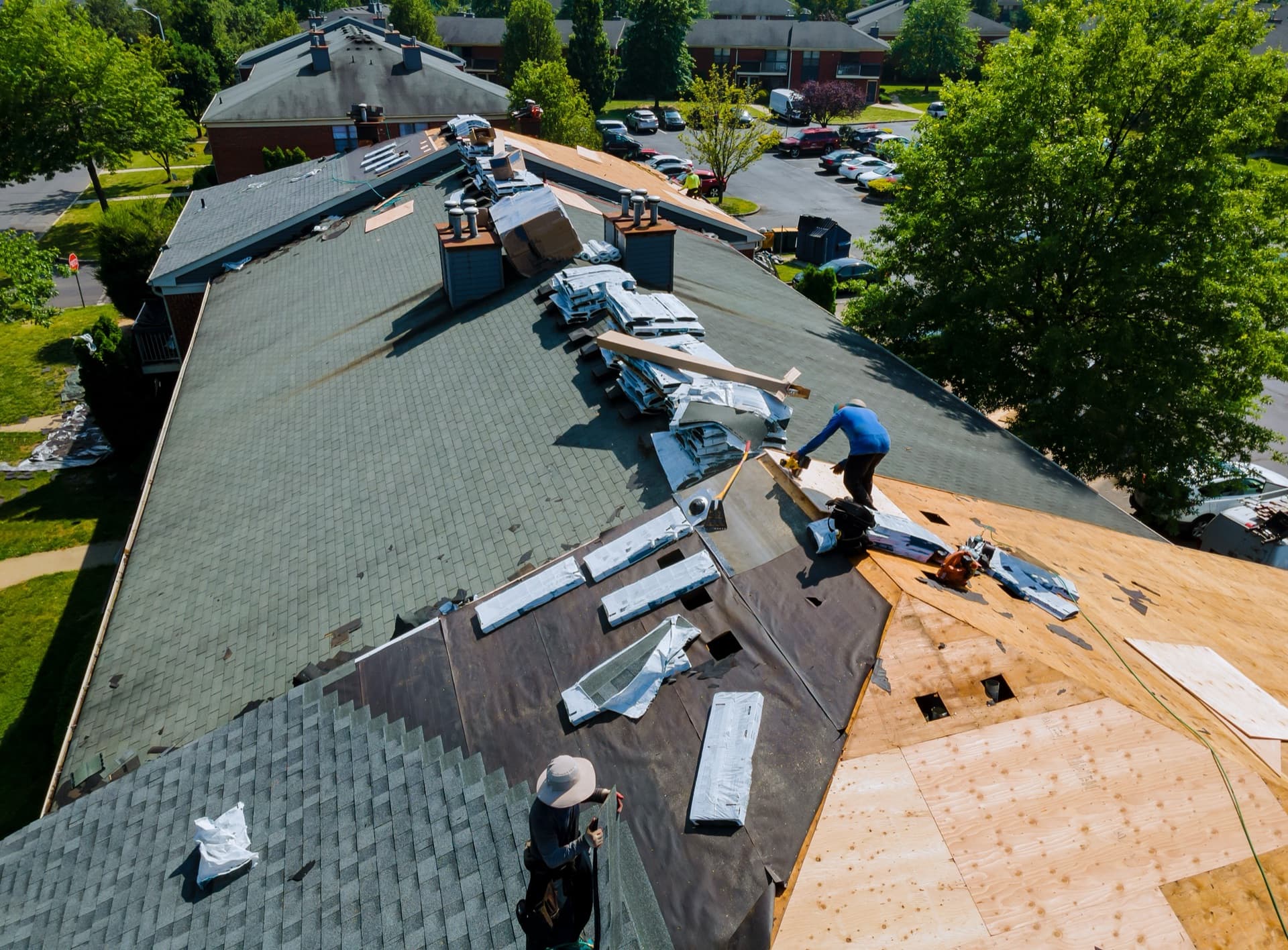
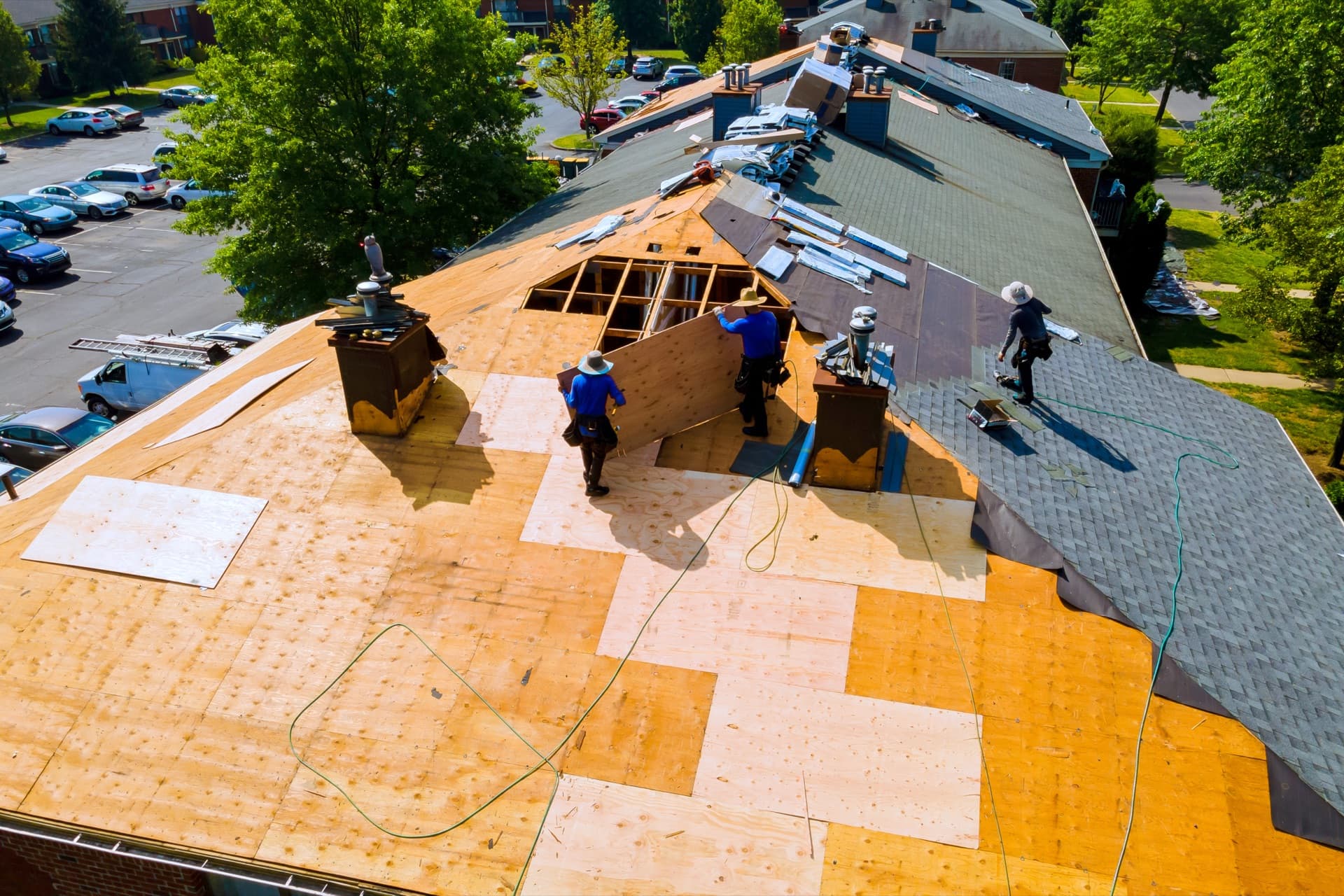
If you can access the attic and press on the underside of the roof deck (or a contractor tells you the deck felt soft when they walked it), that's rotted sheathing. Wet decking has usually been wet for a while, which means water has been getting in through the roofing above it. Localized soft spots near a single failed flashing point can sometimes be repaired in place. Widespread soft decking across the roof means the whole system needs to come off, because there's no way to shingle over rotted plywood.
6. Multiple repairs clustering in a short window
One repair call is maintenance. Three repair calls in eighteen months on the same roof is a pattern. Once failures start clustering, the cost of chasing them individually usually adds up to more than a full replacement, and you're still left with an aging roof once you're done.
#Repair or Replace: The Quick Read
| Situation | Verdict |
|---|---|
| Isolated leak, roof under 15 years, granules intact | Repair |
| Cracked pipe boot, a few lifted shingles, minor flashing gap | Repair |
| Granule loss across the field, curling on multiple slopes | Replace |
| Roof past realistic material lifespan (see table above) | Replace |
| Soft decking in more than one area | Replace |
| Repeat leaks after a prior repair | Replace |

#What Replacement Actually Costs
This is usually where the decision gets real. A repair might run a few hundred dollars. A full replacement is a bigger number, and it should be, because it's buying 20 to 30 more years instead of a patch. Our own 2026 cost breakdown for Seattle puts most single-family replacements between $12,000 and $30,000, with the midpoint around $25,000 for a 2,000 square foot home with architectural shingles. Steep pitches, multi-story homes, and complex rooflines with valleys and dormers push toward the higher end.
A repair rarely closes that gap in one visit, which is exactly why the decision matters. Spend $1,500 chasing symptoms on a roof that's structurally done, and you've paid for part of a replacement without getting one.
#When You're Not Sure
Most homeowners can't tell the difference between "needs a patch" and "needs a new roof" from the ground, and honestly, neither can most contractors without actually walking the roof. That's what a proper roof inspection is for: a real look at the deck, the flashing, the granule condition, and the age math, with a straight answer about which side of the line your roof is on.
If your roof is showing two or more of the signs above, don't wait for the third. Reach out for a free inspection, and we'll tell you honestly if you're looking at a repair or a replacement, no pressure either way.
#Frequently asked questions
How old does a roof need to be before replacement makes sense?
It depends on the material more than a fixed number. Architectural shingles hold up well into their mid-20s here; 3-tab asphalt starts showing its age closer to 15 to 20 years. Age combined with visible wear (granule loss, curling) is a stronger signal than age alone.
Can I just add a second layer of shingles instead of a full tear-off?
Layering is possible in some cases, but it shortens the life of the new layer, adds weight to the structure, and voids most manufacturer warranties. Our cost guide covers why a full tear-off is worth the extra cost most of the time.
Does moss mean I need a new roof?
Not by itself. Moss is common across the Puget Sound and, caught early, soft washing clears it without shortening the roof's life. It becomes a replacement issue only once it's lifted shingle edges and let water sit against the deck for years.
Written by
Everpeak Roofing
Licensed Seattle roofers, WA Contractor Lic. #EVERPRL743KE. We write from what we actually see on roofs across the Puget Sound.
Related roofing services
Got a roof question of your own?
Free inspections across Seattle and the Puget Sound. We take a look, show you photos, and give you a straight answer. No pressure.