Moss isn't just an eyesore. In the Puget Sound, it's the single biggest reason roofs fail early. Here's what's actually happening up there and how we handle it.
If you've lived in Seattle for more than a winter or two, you already know the look. Green fuzz creeping along the north slope, thick mats of the stuff tucked under the shingle edges, maybe a few patches that have turned into full-on lawns. Moss is basically a local mascot at this point. Problem is, it's also the fastest way to kill a roof in the PNW.
Here's the thing most homeowners don't realize. Moss isn't growing on top of your shingles, it's growing underneath them. The filaments work their way between courses, lift the edges, and trap water against the deck. Once water stays on a roof instead of running off it, everything downstream starts to go wrong. The granules wash off, the asphalt dries out, and the plywood underneath starts to soften. We've pulled shingles off Ballard houses that looked fine from the street and found the sheathing turned to pulp.
Why does it happen here so badly? Three reasons. One, we're wet pretty much eight months of the year. Two, a lot of homes sit under tall firs and cedars that keep the roof shaded and damp long after the rain stops. Three, the roof stays cool enough that the moisture doesn't evaporate quickly. That's a perfect growing environment for moss, lichen, and algae.
So what actually works? A few things, in order of how well they hold up.
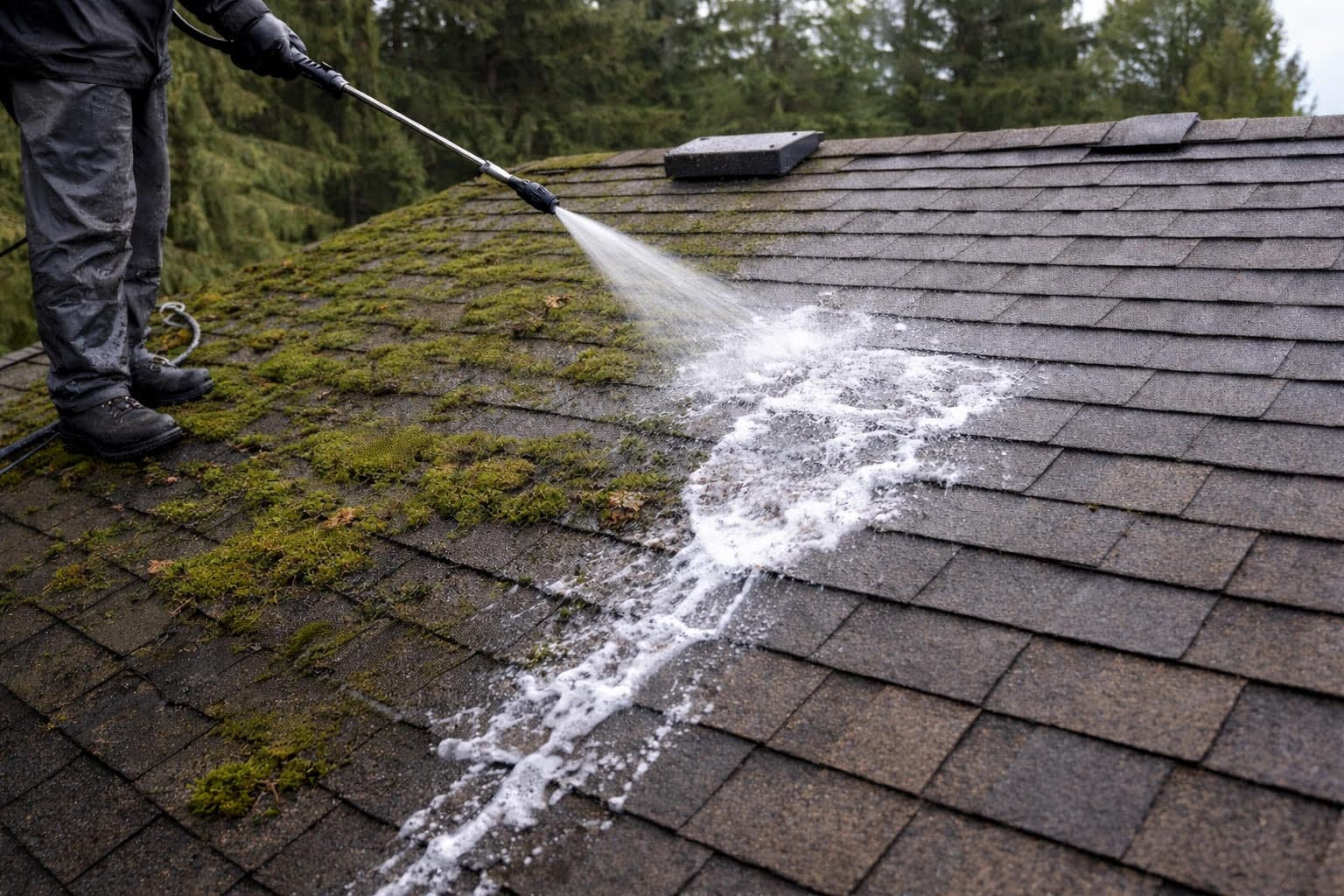
First, get the roof cleaned. Not pressure washed. A pressure washer will strip the granules off your shingles faster than the moss ever would, and you'll shave years off the roof life in one afternoon. Soft washing is the right call. It's a low-pressure application that uses a cleaning solution to kill the moss at the root instead of blasting it off. Once it dies, it rinses away naturally over the next couple of weeks.
Second, install zinc or copper strips along the ridge. When it rains, trace amounts of metal wash down the roof and keep new moss from taking hold. It's not magic, and it doesn't kill what's already there, but it's a cheap preventative that buys you years.
Third, keep the roof clear of debris. Fir needles and leaves trap moisture and give moss something to anchor to. If you've got overhanging branches, get them trimmed back at least a few feet from the roof surface. You don't have to cut the tree down, just give the roof some breathing room.
A word on DIY. We get it, moss removal looks simple. Climb up, scrape it off, done. The issue is that scraping damages shingles, and walking around a wet mossy roof is one of the easier ways to end up in the ER. If you do want to handle it yourself, use a moss killer spray in the fall, let it do the work, and hose it off from the ground in spring. Don't get up there with a stiff brush.
Honestly, the best thing you can do is not wait. Moss is one of those problems where a $400 cleaning at year five saves you a $15,000 replacement at year twelve. We see it every season. If your roof has any green on it at all, it's worth getting someone up there to take a look.
Written by
Everpeak Roofing
Licensed Seattle roofers, WA Contractor Lic. #EVERPRL743KE. We write from what we actually see on roofs across the Puget Sound.
Related roofing services
Got a roof question of your own?
Free inspections across Seattle and the Puget Sound. We take a look, show you photos, and give you a straight answer. No pressure.