Washington metal roofs cost $6 to $18 per sq ft installed in 2026: standing seam $12 to $18, metal shingle $9 to $14, corrugated $6 to $9.
Metal roofing has gotten a lot more popular in Washington over the last few years. Part of it is the longevity (50 years isn't unusual), part of it is the low maintenance, and part of it is that people are just tired of replacing asphalt shingles every 25 years. But the first question everyone asks is the same: how much?
#Metal roofing types and 2026 pricing
| Type | Installed Cost / sq ft | Fasteners | Best For |
|---|---|---|---|
| Standing seam | $12 to $18 | Concealed clips | Residential, modern homes, long-term ownership |
| Metal shingle / shake | $9 to $14 | Hidden | Traditional neighborhoods, complex rooflines |
| Corrugated / R-panel | $6 to $9 | Exposed screws | Shops, barns, outbuildings |
#Standing seam: $12 to $18 per square foot installed
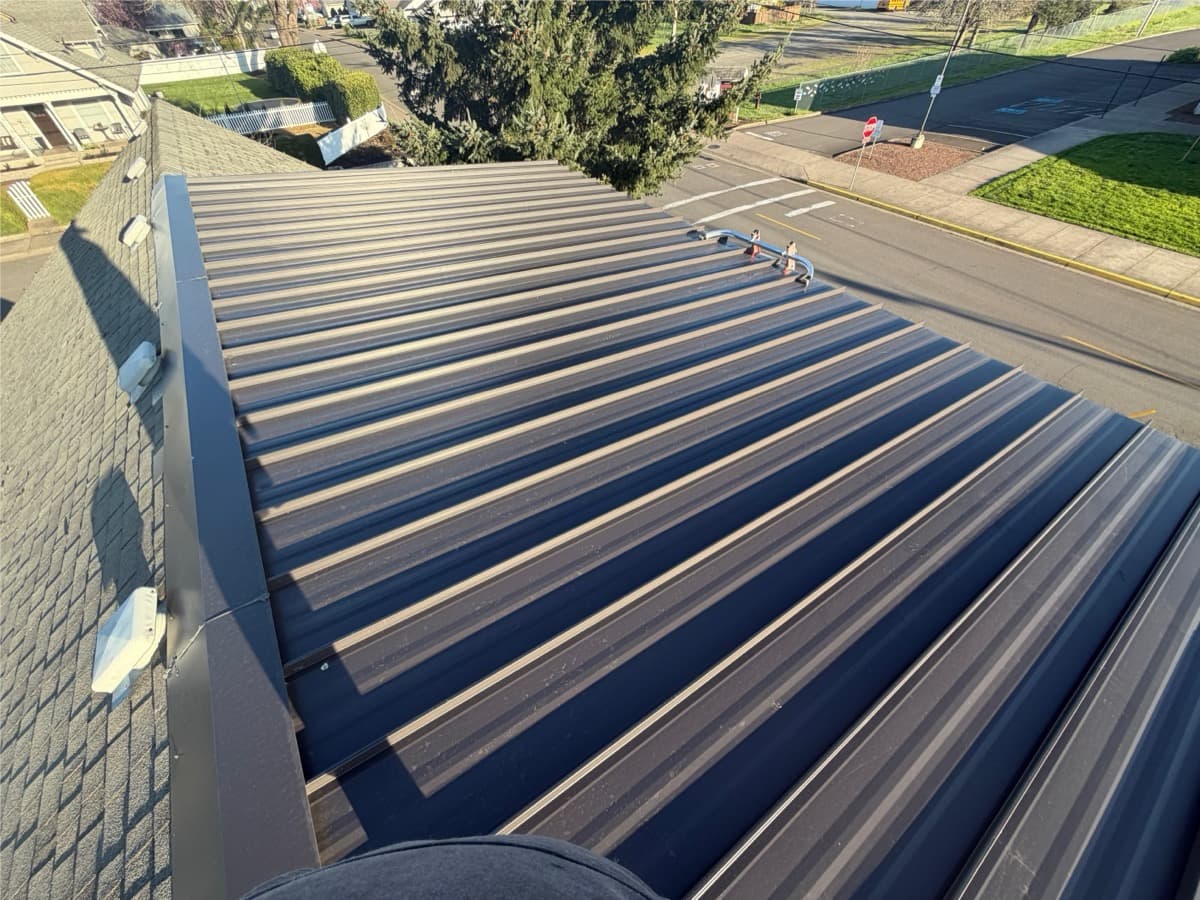
Standing seam is the premium option. Vertical panels with raised seams that lock together, no exposed fasteners, clean modern lines. The panels expand and contract with temperature changes without loosening because the clips allow movement, a real advantage over exposed-fastener systems where screws can back out over time.
Standing seam costs more because the material is pricier and the install takes more skill. You're paying for that precision, and it shows in the finished product. For a closer look at how it stacks up against asphalt, see our metal vs. shingles breakdown.
#Metal shingle and shake: $9 to $14 per square foot installed
Metal shingles are stamped to look like traditional shingles or cedar shake. From the street, most people can't tell the difference. They're lighter than standing seam, easier to install on complex rooflines with valleys and hips, and give you the longevity of metal without the industrial look. A solid middle ground for homeowners who want metal's durability but live in a neighborhood where standing seam would look out of place.
#Corrugated and R-panel: $6 to $9 per square foot installed
Corrugated metal and R-panel are the workhorse of agricultural and shop buildings. The panels are cheaper, the install is faster, and the screws go right through the face of the panel. The tradeoff is the exposed fasteners, each screw has a rubber washer that seals it against the panel.
Over 15 to 20 years, those washers dry out, crack, and start leaking. You'll need to re-screw the roof at some point, which adds a maintenance step that standing seam doesn't have. Fine for a shop or outbuilding. Not the right call for a primary residence.
#A real example: 1,800 sq ft Bellevue home
Side-by-side cost on a real house
An 1,800-square-foot footprint home in Bellevue, medium 6:12 pitch. Standing seam at $14 per square foot: total around $25,200. The same house with architectural shingles at $9/sq ft: around $16,200. Metal premium on this house: roughly $9,000. The shingle roof lasts 25 to 30 years. The metal roof lasts 50. If you stay in the house 20-plus years, the metal pays for itself because you skip an entire replacement cycle.
#When the premium makes sense, and when it doesn't
Metal makes sense when:
You plan to stay long-term (20 years or more). You don't want to think about your roof again. You're in a high wind exposure area, standing seam handles sustained wind better than shingles on exposed hilltop lots. You're tired of moss, metal doesn't grow moss the way asphalt does, which is a real perk in the PNW.
Metal doesn't make sense when:
You're selling the house in the next five years, buyers appreciate it, but you won't recoup the full premium at resale. Your budget is tight and a quality shingle roof would serve the house well for the next 25 years. Your HOA restricts metal roofing, some neighborhoods in Sammamish and parts of Issaquah have restrictions on panel profiles or colors.
For a fuller look at what every roofing material costs in the area, check our Seattle roof replacement cost guide and our rundown of the best roofing materials for the PNW. We install metal across the Puget Sound region, from Seattle to Bellevue and out to Issaquah.
If you want real numbers for your specific roof, use our roof cost estimator or request a quote. We'll measure the roof, walk through your roof replacement options, and give you a written price.
Written by
Everpeak Roofing
Licensed Seattle roofers, WA Contractor Lic. #EVERPRL743KE. We write from what we actually see on roofs across the Puget Sound.
Related roofing services
Got a roof question of your own?
Free inspections across Seattle and the Puget Sound. We take a look, show you photos, and give you a straight answer. No pressure.